
Commentary
Why AR Rahman's Victimhood Narrative Rings Hollow
K Balakumar
Jan 18, 2026, 10:05 AM | Updated 10:05 AM IST
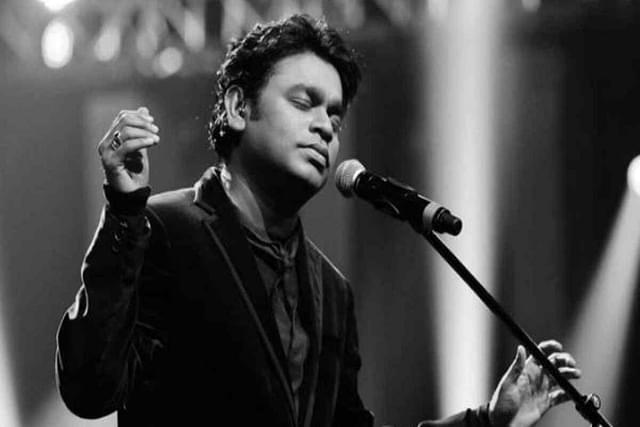
In the hyper-polarised landscape of 2026, the term Chinese whispers has taken on a new, jagged edge. Speaking to the BBC Asian Network just days ago, AR Rahman, the Oscar-winning 'Mozart of Madras', attributed his dwindling Hindi film portfolio to a 'power shift' and, more pointedly, to a 'communal thing.'
It was not a direct accusation, but a heavy insinuation to level against an industry that, for nearly a century, has been the most secular melting pot in the country. But as the echoes of Rahman's interview reverberated across the media, a parallel story had unfolded two weeks back in the cricket circles of Australia. Retiring veteran opener Usman Khawaja recently bowed out of international cricket with scathing words on the 'racial stereotypes' and 'unequal treatment' he claims to have fought for fifteen years.
The point is both have been embraced as national icons. And both, in the twilight of their record-breaking careers, have reached for the narrative of the persecuted outsider. The question for 2026 is, does this narrative hold water, or is it a defensive mechanism against the cold reality of shifting markets and fading form?
When criticism meets identity
As said, Khawaja's retirement press conference at the SCG was a mirror image of Rahman’s interview. Khawaja claimed that criticism of his match preparation, specifically a golf tournament he played in which he sustained an injury, carried 'racial undertones' that would not be applied to 'Aussie larrikins.'
The backlash was swift. Former fast bowler Jason Gillespie, Australia’s first Indigenous men's cricketer, noted that being held accountable for professional choices isn't 'bullying' or 'racism'. Khawaja, much like Rahman, has enjoyed immense backing. He was the first Muslim to captain an Australian state side and a central figure in Cricket Australia’s multicultural initiatives. To claim systemic bias after a fifteen-year career at the very top feels, to many, like a temper tantrum against the inevitability of age and scrutiny.
The Rahman paradox
If the Hindi film industry were truly communalising against the likes of Rahman, the evidence on the ground contradicts him. Rahman is currently composing the score for Nitesh Tiwari’s Ramayana, arguably the most significant Hindu cultural project in modern cinematic history. He is collaborating with Hans Zimmer on a project that sits at the very heart of India's ideological zeitgeist.
Furthermore, Rahman’s 2025 was dominated by Chhaava, a historical epic centered on Chhatrapati Sambhaji Maharaj. By his own admission, Rahman told the director, "Why do you need me for this?" to which the director replied, "We need only you." If a 'communal thing' were preventing him from getting work, he would not be the primary choice for films that define the current national mood.
Rahman's stature is unassailable. His catalogue of scores has become part of the cultural lexicon. His collaborations with film industries across India and abroad are extensive. His name is synonymous with artistic excellence. In cinema’s power structures, he is not a marginal figure. And yet, in framing his relationship with identity and professional acceptance through a lens of exclusion, he has touched a nerve.
Reality vs Rhetoric
When an artist celebrated by a multi-billion-dollar industry speaks of marginalisation without acknowledging the levers of power he has accessed, audiences instinctively push back. When a sportsman whose accomplishments are central to national pride frames criticism as racial stereotyping without clear evidence of systemic bias, commentators question the premises of his claim.
That pushback is not, on its face, evidence of bigotry. Often it reflects discomfort with the incongruity between power and persecution.
In both the Indian cultural sphere and global sports culture, powerful figures speaking about identity and marginalisation must do so with precision and self-awareness. Their words carry weight precisely because they have succeeded, and that success invites scrutiny of their claims.
Rahman is correct about one thing. A 'power shift' has indeed occurred. But it is corporate. Bollywood seems to have moved away from the 'One Film, One Composer' era that the likes of Rahman ruled. Today, music labels demand five different composers for one movie to ensure 'viral' hits. Modern composers like Tanishk Bagchi are reportedly 'office-sitters', they are constantly in the room with producers. Rahman, by his own admission, 'doesn't search for work.' In a hyper-competitive, corporatised market, silence is often mistaken for unavailability.
The most jarring part of Rahman’s claim is the 'South Indian outsider' tag. In 2026, the 'South' is the Indian film industry. From the dominance of Telugu and Tamil cinema at the box office to composers like Anirudh taking over Shah Rukh Khan's biggest projects, the regional barrier has vanished. For Rahman to claim he is being sidelined because he is from the South or because of his faith ignores the success of a dozen other Muslim and South Indian artists who have adapted to the new Pan-Indian machine.
The larger point is, when legends like Rahman and Khawaja feel the ground shifting beneath them, it is perhaps easier to blame 'Chinese whispers' and 'racial undertones' than to acknowledge that the world has simply moved on to a different rhythm. To frame professional evolution as communal victimhood doesn't just ring hollow, it risks delegitimising the struggles of those who actually face prejudice without the shield of an Oscar or a Baggy Green.
 Join our